

At CES Showstoppers 2026, Infinix didn’t just unveil new technology, it outlined a vision for how smartphones could evolve beyond today’s limits. Under its “Joyful Tech, Beyond Limits” philosophy, the brand introduced a range of innovations spanning satellite connectivity, advanced cooling, expressive design, and modular AI accessories. Together, they point to a future where phones are more resilient, more personal, and more capable in extreme scenarios.
Rather than focusing on one headline feature, Infinix’s CES showcase showed how multiple technologies can work together to redefine what a consumer smartphone can do.
Satellite Communication Without the Usual Barriers
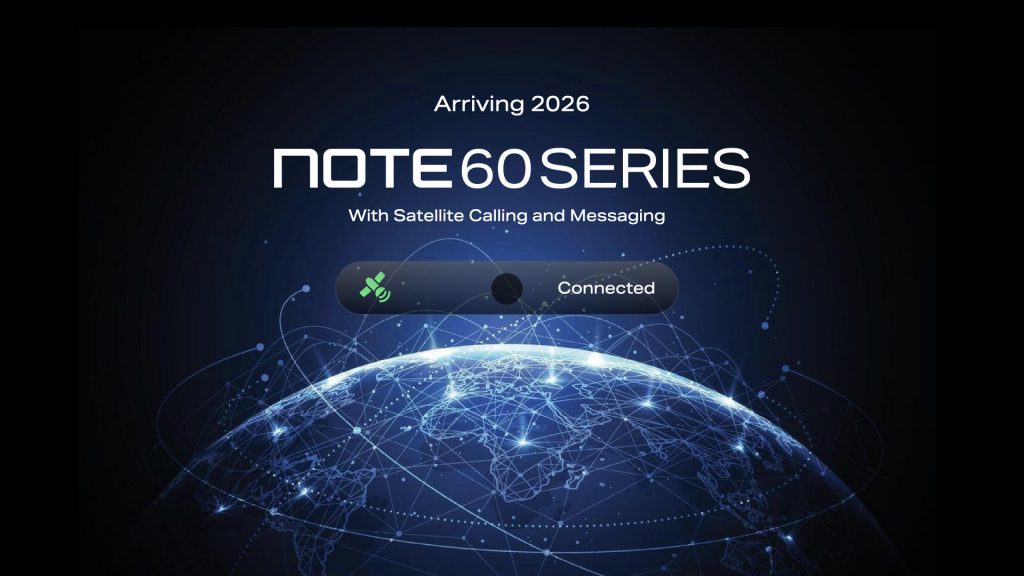
One of the most striking announcements was Infinix’s first global satellite communication solution for smartphones. Unlike existing satellite features that are often limited by region, setup, or one-way messaging, Infinix’s system is designed for everyday use with minimal friction.
With projected coverage across nearly two-thirds of the Earth’s surface, the system supports 4kbps transmission, enabling two-way high-definition voice calls and short messages. It operates on a unified communication framework that automatically switches between traditional mobile roaming and satellite connectivity, without requiring additional registration or special setup.
The experience is designed to feel familiar: users can make calls using speaker mode or Bluetooth headsets, with clear voice pickup even in challenging environments like strong wind or remote areas with no cellular signal. The upcoming NOTE 60 Series will be the first Infinix device to feature this capability.
Beyond emergency use, Infinix positions this technology as a building block for a broader Space-Air-Ground integrated network, one that could eventually support future standards like 6G, as well as advanced applications such as AR experiences and real-time environmental AI.
Cooling Built for Sustained Performance, Not Short Bursts
Performance is only useful if it can be sustained, and Infinix tackled this challenge with its new HydroFlow Liquid Cooling Architecture. At its core is the industry’s first Dual-Piezoelectric-Ceramic Single-Pump Technology. By using electric current to drive high-frequency deformation in piezoelectric ceramics, the system pushes fluorinated liquid at speeds of up to 6.5 ml per minute, roughly double that of conventional active liquid cooling systems.
The cooling channels are engineered to fully cover the smartphone’s mainboard heat sources, allowing heat to be dissipated with far greater precision.
Complementing the liquid system is another first for smartphones: a piezoelectric fan. Instead of traditional spinning blades, it uses a 0.1mm ultra-thin vibrating sheet that pulses 25,000 times per second. The result is a high-pressure, turbulent air jet that delivers over ten times the heat dissipation efficiency of conventional fans, while remaining nearly silent thanks to its solid-state design.
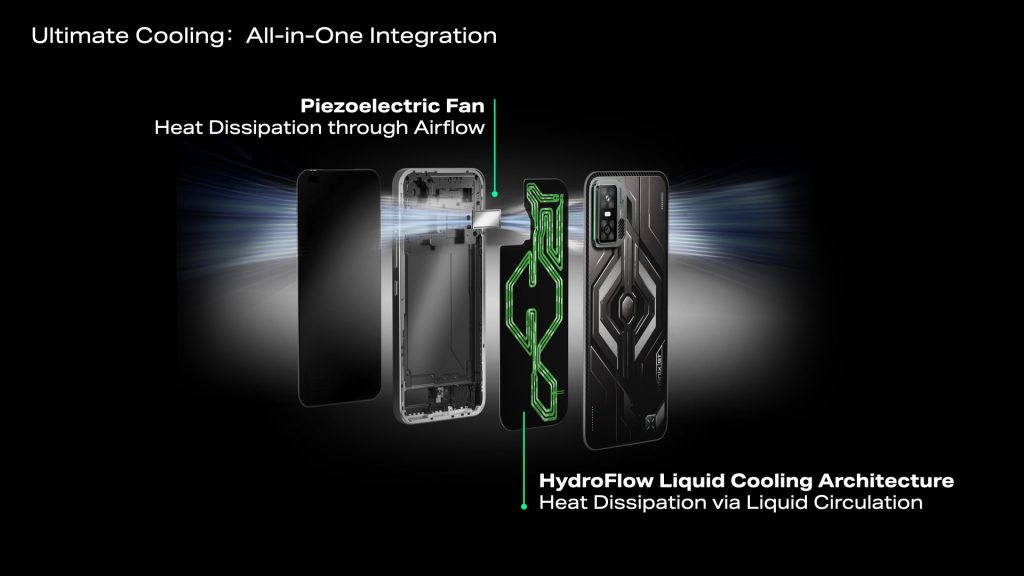
Together, liquid cooling and active air cooling form a single integrated system aimed at delivering stable performance and a cooler feel during extended gaming or heavy workloads. Infinix also hinted at future developments, including immersive full-chamber cooling designs where liquid directly contacts key components for even faster heat transfer.
Turning the Back of the Phone Into a Living Surface
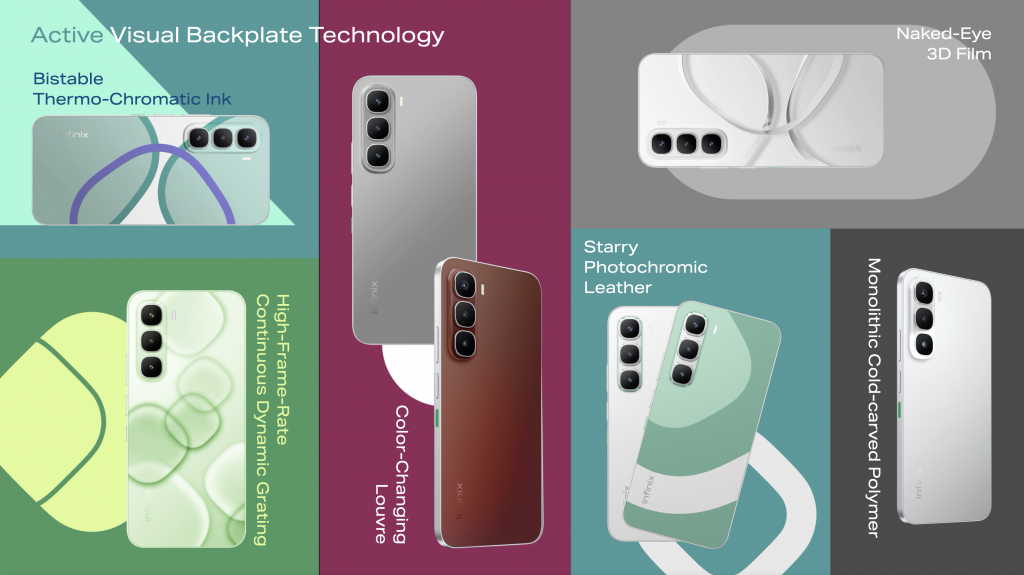
Infinix also explored how smartphones can become more expressive through its Active Visual Backplate Technology. Rather than relying on powered displays or LEDs, this system uses precise optical microstructures – including Color-Changing Louvres, dynamic gratings, and naked-eye 3D films – to manipulate reflected light.
The result is a back panel that changes appearance depending on angle, motion, and environment. Simply rotating the phone can reveal flowing colors, smooth animated patterns, or three-dimensional visual effects without consuming extra power.
The experience goes further with smart materials like bistable thermo-chromatic ink and photochromic leather, allowing patterns and colors to shift in response to temperature and ambient light. These effects are integrated into a monolithic cold-carved polymer structure that blends the camera module seamlessly into the rear panel, creating a smoother, more refined finish.
Rather than being purely decorative, the design emphasizes interaction, a phone that visually responds to how it’s held, moved, and used.
A Modular AI Ecosystem for Different Scenarios
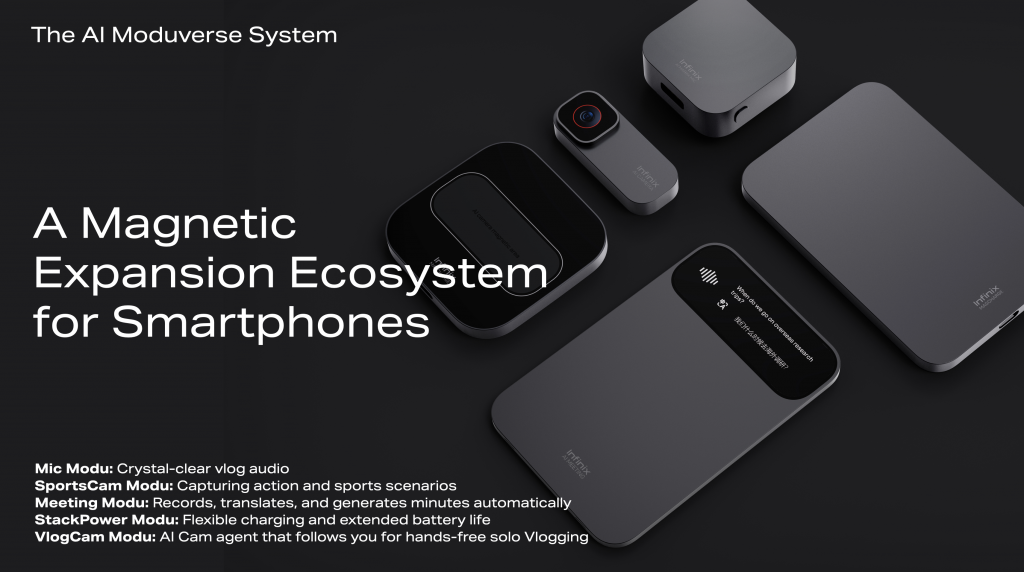
Rounding out the showcase was the AI ModuVerse system, a modular ecosystem built around a unified magnetic interface. The idea is simple: instead of forcing one device to do everything, users can attach specialized modules designed for specific tasks.
The lineup includes a Mic Modu for professional-grade noise reduction, a SportsCam Modu with enhanced anti-shake stabilization, a Meeting Modu that supports translation and automatic note generation, a StackPower Modu for expandable power, and a VlogCam Modu featuring AI-driven subject tracking and gesture control.
By combining hardware modules with AI capabilities, Infinix aims to give users flexible tools that adapt to work, play, and creative scenarios without turning smartphones into bulky all-in-one compromises.
A Broader Picture of Mobile Innovation
Taken together, Infinix’s CES 2026 announcements paint a picture of smartphones evolving beyond incremental upgrades. Satellite connectivity extends communication beyond borders, advanced cooling supports sustained performance, visual materials redefine design expression, and modular AI accessories expand how devices are used in daily life.
Rather than chasing a single trend, Infinix appears focused on building a more resilient, adaptable, and expressive mobile experience, one designed to deliver both performance and personality.
For the latest updates, visit Infinix Malaysia’s official website or follow them on Facebook, Instagram, and TikTok.


More Stories
HONOR 600 Series Lands First in Malaysia with Major Camera Upgrades
HONOR Is Elevating Its N Series And It’s A Bigger Deal Than You Think
realme 16 Pro Series: Where Street, Travel, and Style Come to Life